The Metaphoric Roots of Maker Culture
On the tension and the ground of object repurposing.

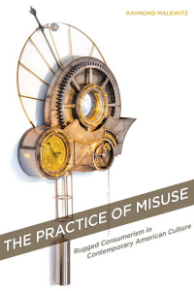
People have long been fascinated by the creative ways that humans repurpose objects to suit their particular needs and desires. Recently, a number of artists, historians, and critics have begun to document the myriad cases of object repurposing and the impulses behind them—myself included. In The Practice of Misuse: Rugged Consumerism in Contemporary American Culture, I examined some of these practices as they surfaced in literature, art, and other cultural artifacts within the United States from the 1960s to the present. I spent the majority of the book outlining the strange interrelationships that arise among object repurposing, contemporary “Maker” communities such as Instructables, post-apocalyptic literature, and American left- and right-libertarian politics.
If I had to do it over again, I’d add the hit television series Project Runway, which issues an annual “unconventional challenge” asking contestants to fashion clothing out of material scrounged from a hardware store, a grocery store, or a candy store.
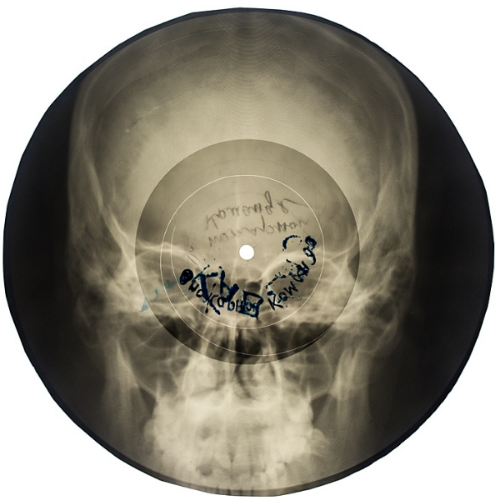
Though Project Runway, and the other aforementioned examples are specifically American case studies of object repurposing, these activities are not, of course, limited to the United States. Stephen Coates’ X-Ray Audio Project tells the story of how Russian audiophiles illegally distributed Western music within the Soviet Union during the 1950s using used x-ray plates scavenged from the waste bins of local hospitals. As he notes, the plates typically preserved the skeletal images from the plates and for this reason were called “bones” or “rib music” (roentgenizdat).
In a similar vein, Cuban artists and designers Ernesto Oroza and Diango Henandez have amassed an enormous collection of repurposed artifacts assembled during the late 1980s and 1990s in Cuba. This “Special Period” (Período especial) coincided with the dissolution of the Soviet Union, and the resultant economic isolation encouraged an incredible amount of DIY experimentation in Cuba. Within Oroza and Henandez’s collection are television antennae made out of metal food trays, fans and shoe-polishing machines made out of washing machine motors, and motorized vehicles called “rikimbili” out of fumigation machines and water pumps.
Oroza understands these objects as manifestations of what he calls “technological disobedience”; Cubans “disrespected the ‘authority’ held by these contemporary objects.” This “disrespect” yields a new, active, playful way of interacting with objects that considers “all of these symbols that unify an object…that make it a unique entity [disappear].”
If object repurposing is a kind of “technological disobedience,” these varied examples suggest that that disobedience changes to fit different national and historical contexts. From the anti-Soviet work of “bones” to the post-Cold War message of “rikimbili” to the DIY culture of American Maker communities, repurposing is a practice constituted by political transformation as much as object experimentation. But how might these diverse activities be brought together and read as manifestations of a shared aesthetic practice? Borrowing from the history of rhetorical analysis, I contend that the pleasure that we get from seeing objects repurposed in surprising ways operates along the same lines as the pleasure we get when we encounter a surprising metaphor in creative writing.
As we are taught in literature classes, metaphors are figures of speech that compare two different things. My favorite metaphor comes from Annie Dillard’s Pilgrim at Tinker Creek: the unnamed narrator looks into a river in the Blue Ridge Mountains of Virginia and watches “water turtles…gliding down with the current in a series of easy, weightless push-offs, as men bound on the moon.” As this example richly suggests, the two terms in a metaphor share a common “ground” (or “tertium comparationis” in rhetorical analysis)—in this case, the similar slow-motion action of a turtle moving through water and an astronaut moving through a vacuum on the moon. A metaphor also requires a “tension” that generates surprise and that therefore startles the reader into a new kind of perception—in this case, the surprising commonality between very different species and contexts. This surprise, in turn, defamiliarizes both turtle and astronaut, enabling us to recover what the great Russian literary critic Victor Shklovsky calls “the sensation of life; [art] exists to make one feel things, to make the stone stony.” Or, in this case, Dillard makes the turtle turtle-y.
There are plenty of ways to screw this process up, of course, which makes crafting a good metaphor challenging. Too much ground—say, a water turtle being compared to a person swimming—and the metaphor loses its surprising tension. Too much tension—say, the same turtle being compared to a laptop computer—and the “tertium comparationis” seems arbitrary and obscure.
Something similar happens, I think, when we examine our affective responses to various examples of object repurposing. Surely the pleasure of listening to a bootleg Soviet x-ray record has little to do with sound quality. Indeed, a critic for the London Guardian likened the experience to listening to music “heard from across a street being pummelled by torrential rain.” Instead, the pleasure seems metaphorical: a pleasure that is tied to the surprise and recognition of seeing “ribs” and other “bones” on a crudely cut record.
On the one hand, the bones call attention to the common material properties of thin vinyl records and thin glass x-ray plates. This, within the terms of the metaphor analogy, is the ground uniting two unlike things. On the other hand, the differences between the two objects’ typical contexts (one serious, scientific, and visual, the other playful, commercial, and auditory) generate the surprising tension that balances with the ground to create a material “metaphor.”
If I am correct, this metaphor enables us to see why certain acts of object repurposing delight us and others do not. Consider two examples: one, a disposable coffee cup turned into seed starting trays and turf made from recycled rubber tires.
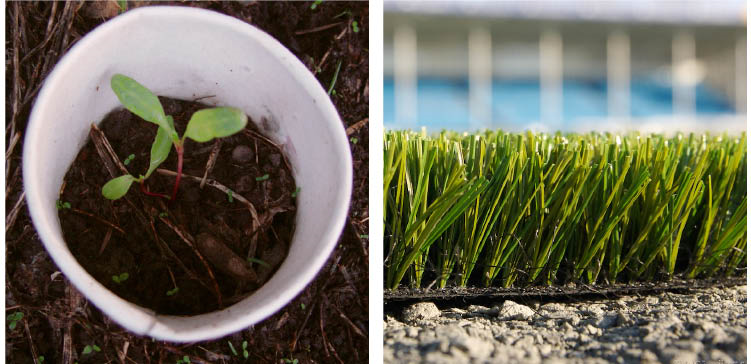
In the first case, the original function of the cup is essentially preserved: instead of holding hot liquids, it now holds loose dirt. While this changed function may provoke some pleasure—perhaps appealing to our anxieties about our ever-increasing environmental footprint—the repurposed object has too much ground and not enough tension to be metaphorical. In the second case, the original artifacts—used automobile tires—is completely effaced in its transformation into artificial turf, eliminating the “ground” for a material metaphor and, potentially, obscuring its health dangers in the process. In neither case do we delight in the material experimentation in the same way that we marvel at the ingenuity of a food tray antenna or the preposterousness of a dress made out of licorice sticks.

This aesthetic model of object repurposing is not without its flaws (it is a metaphor after all!) but it does provide a way of understanding our affective responses to the DIY culture of the 20th and 21st centuries. Or at the very least, it enables us to evaluate the quality of work on the next “unconventional challenge.”
Start reading The Practice of Misuse »

Raymond Malewitz is Assistant Professor of English at the School of Writing, Literature, and Film at Oregon State University and author of The Practice of Misuse: Rugged Consumerism in Contemporary American Culture.


