Separate and Unequal Justice
On Laquan McDonald and the racialized culture of the criminal court system.
The Gang Crimes Unit of the State’s Attorney’s Office in Cook County, Chicago was where the most bullish state’s attorneys worked. Many were nicknamed for their ferocity, sounding like their own gang of sorts—“Dirty Dog” Richardson, “Beast-Man” Miller, William “Billy Club” McManus, to name a few. These were the types of men who comfortably put both feet up on their desk and welcomed you to their office with the soles of their shoes.
Nameless mug shots of a stream of black and Latino defendants acted as wallpaper for their office.
Nameless mug shots of a stream of black and Latino defendants acted as wallpaper for their office—a visual souvenir of convictions and conquests. This wallpaper provided a striking, racialized backdrop to the practice of criminal law and was my first introduction to the criminal courts and criminal justice. Nearly all the prosecutors who built and exhibited this showpiece were white; in contrast, nearly every mug shot in the mural was a person of color. I moved backward several steps so that I could see the entire wall, and then I paced reverently along it, as though I were scanning a memorial of the dead.
I was the only person of color in the room; I was the prosecutor’s unlikely new law clerk—a person who looked more like someone from the mural than like an aspiring attorney in the office. Truth be told, I felt like a little girl playing dress-up in a power suit. I tried to keep my head down and fit in, but I was visibly stunned at the scale of the mural and the undeniable color line of “color-blind” criminal justice. Sensing my awe, my supervising prosecutor narrated the environment: “You see the scum we have to deal with?” The mural provided a vivid, symbolic picture of who the “other” was in this dynamic.
Court professionals—prosecutors, defense attorneys, and judges alike—often used the phrase “working in the trenches” to distinguish their work in the criminal justice system as separate and different from more cushy or elite aspects of the law. The “trenches” implies a warlike dynamic, a place to hide under hostile fire, and begs the question Who is the enemy? I scrawled this note, and many others, in a small corner of my legal pad that became my first ethnographic field observations at this site. Nameless mug shots of a stream of black and Latino defendants provided a collective racial caricature of the prosecutors’ central mission as courtroom professionals. In the words of this prosecutor, they were taking this kind of “scum” off the street.
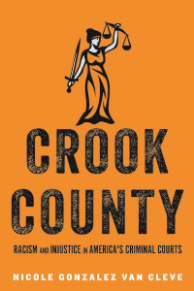
Crook County exposes the myth of color-blind criminal courts and examines how racial meanings become ingrained within the administration of justice despite procedural protections. Incarceration in the United States has increased sevenfold over the past forty years. This growth is concentrated among blacks and Latinos and has transformed our social and political landscape, including the racial composition of our courts and prisons. The black-white difference in incarceration rates is particularly astounding. By all other social indicators of inequality, incarceration is unmatched. “Racial disparities in unemployment (two to one), nonmarital childbearing (three to one), infant mortality (two to one), wealth (one to five) are all significantly lower than the eight to one black-white ratio in incarceration rates.” Furthermore, racially disproportionate incarceration contributes to a cycle of poverty, growing structural inequality, and higher (rather than lower) crime rates.
Numerous works examine the collateral consequences of mass incarceration on poverty, crime, and inequality within communities of color and even, on daily life; yet few works discuss the impact of racial disparity on the criminal justice apparatuses themselves. In fact, had I not ventured into the courthouse as a budding ethnographer assuming the role of a law clerk, I would not have seen the striking parade of black and brown defendants through courts managed by mostly white attorneys and judges. This book represents my journey to understand how the racial and social divides that manifest in the era of mass imprisonment affect the experience of justice in our criminal courts and the due-process procedures that appear to be race-blind.
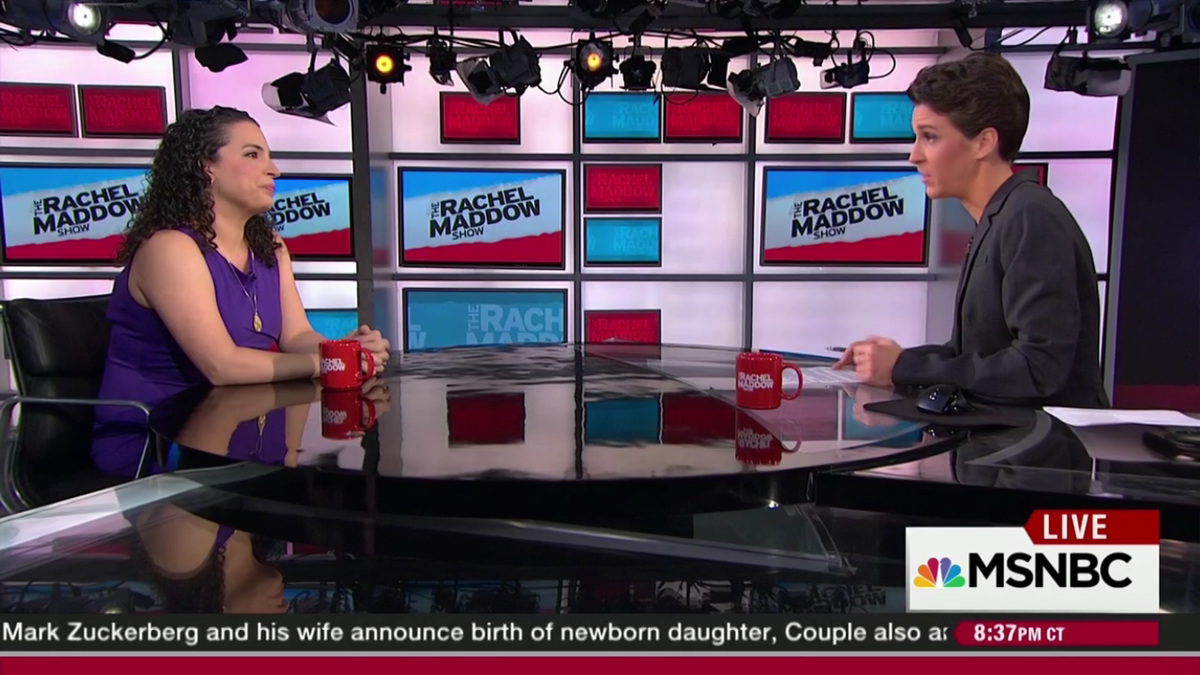
In the Media: Van Cleve on The Rachel Maddow Show
This post was adapted from Crook County: Racism and Injustice in America’s Criminal Courts by Nicole Gonzalez Van Cleve.
See the Table of Contents for Crook County »

Nicole Gonzalez Van Cleve (@nvancleve) is Assistant Professor of Criminal Justice, with courtesy appointments in Sociology and in Law, at Temple University and author of Crook County.
Also see

NBC News
Anita’s Army: Rank and file racism in the power to prosecute
NBC News
Latina Criminologist: Deep Problems With Chicago Police, Prosecutors
Stanford University Press blog
Ethical Witness in a Time of Racial Phobia
How participating in protest helps dispel reflexive racism.


