A Call for More-than-Human Legalities
On law and societies in the “Anthropocene.”
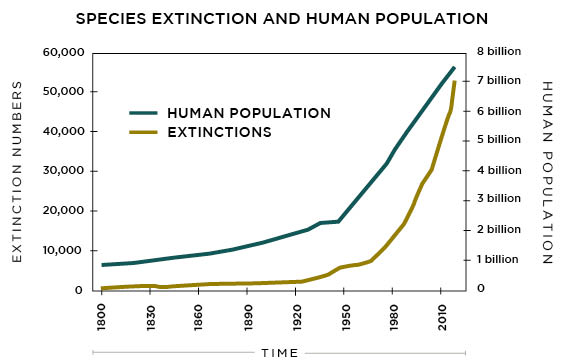
While the earth’s homo sapiens populations grow exponentially by the day, scientists have been documenting an opposite trend with many nonhuman species. A 2014 Science article estimates that present rates of extinction “are about 1,000 times the likely background rate of extinction”—that is, 1,000 times greater than rates of extinction we might expect to see resulting from so-called natural causes. Indeed, the global Red List of the International Union for Conservation of Nature and many parallel national lists have been documenting the disappearance of numerous species at astonishing rates. Accordingly, some have named the age we’re living in the “Anthropocene”—the age of Man—to indicate not only the enormous threat that humans currently impose on Earth’s nonhuman populations and ecosystems, but also our responsibility toward these other forms of life and matter.
What does all this have to do with law? Potentially, quite a bit. And indeed, LSA’s 2015 theme purports to engage in, among other things, conversations about the “emancipation and protection of the world’s most vulnerable populations.” The potential is therefore already there for the LSA to place more emphasis on some of the most vulnerable populations alive today: those of nonhuman animals. Nonetheless, only one session this year—one of 480—is dedicated to an animal-related issue. These session panelists, along with one or two others speaking on animal topics in different sessions, represent a miniscule contingent of LSA scholars—especially so considering the drastic human impact on nonhuman life forms, wrought by the explicit or tacit deployment of various legal systems and regulatory regimes.
Until recently, the LSA lacked emphasis on anything other than human subjects (with the exception of corporations). This reflected a broader tendency by its members; and indeed, such topics have generally been absent from the law and society scholarship at large. My survey of two central law and society journals, Law and Society Review and Law and Social Inquiry, revealed that of 265 articles, 165 book reviews, and 63 review essays published between 2008 and 2013, only two were dedicated to questions concerning nonhuman animals. Other nonhuman organisms have typically been even less visible in sociolegal scholarship.
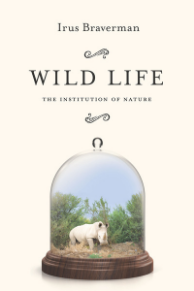
Research on the legalities of nonhuman life stands to benefit greatly from the input of keen-eyed sociolegal scholars, who possess the necessary tools to critically engage the dilemmas that currently confront nonhuman life, in turn advancing their own thinking in myriad ways. The legal questions confronting nonhuman animals today raise a plethora of ethical, cultural, and political issues. My recent research, for example, considers the challenges facing contemporary conservation at a time when the long-established definitions of nature have collapsed. I interviewed over 120 conservation biologists and wildlife managers in an attempt to answer a number of fraught questions: What if certain species can no longer live in their “natural” habitat (because of climate change, disease, etc.) and can only survive in captivity? Should such species be “made to live” or should they be “let to die” (to draw on Foucault’s terminology)? And what regulatory frameworks are, or should be, in place to govern processes for deciding which nonhuman lives are more (or less) worth saving, when humans cannot possibly save them all?
The potential for sophisticated research into the relationship between law and life—different forms of life—is particularly high in light of law and society’s historical engagement with cutting edge scholarship, including critical race theory, critical legal studies, feminist theory, legal pluralism, and postcolonial studies. While the overwhelming majority of this scholarship is anthropocentric, it contains the foundations for exploring the frontiers of human-nonhuman law. The capaciousness of the phrase in the meeting’s 2015 theme—to explore “vulnerable populations”—signals a promising shift in this direction, as nonhuman forms of life, and endangered nonhuman animals and ecosystems in particular, easily fall under this category.
Legal geography, which can be seen as a subtradition of law and society, already engages space, matter, and corporeality and is therefore a particularly apt candidate for staking out the central concerns of more-than-human life. Through engaging a posthumanist and multispecies account of law, sociolegal scholars could finally point the way out of the restrictive domains of the (neo-)liberal animal rights framework that has until now dominated the legal terrain.
From the starting point of traditional animal rights law that classifies nonhuman animals and others into fixed categories based on their characterization as more-like-humans, we need to move toward a dynamic and fluid approach that acknowledges the myriad ways of being in the world, their significance to law and, in turn, law’s significance to these other modes of existence. Such a move toward a more pluralistic law will recognize that we live in a mixed human-nonhuman society—an acutely relevant recognition for law and society scholars. Drawing on critical engagements with the question of nonhumans in other disciplines and traditions, I urge law and society scholars to make way for a “more-than-human” turn in law.
 Irus Braverman is Professor of Law and Adjunct Professor of Geography at the University of Buffalo, SUNY. She is the author of Planted Flags: Trees, Land, and Law in Israel/Palestine, Zooland: The Institution of Captivity, Wild Life: The Institution of Nature, and co-editor of The Expanding Spaces of Law: A Timely Legal Geography. Her book Animals, Biopolitics, Law: Lively Legalities is forthcoming from Routledge.


