Reading Iran
Recommended books about Iran
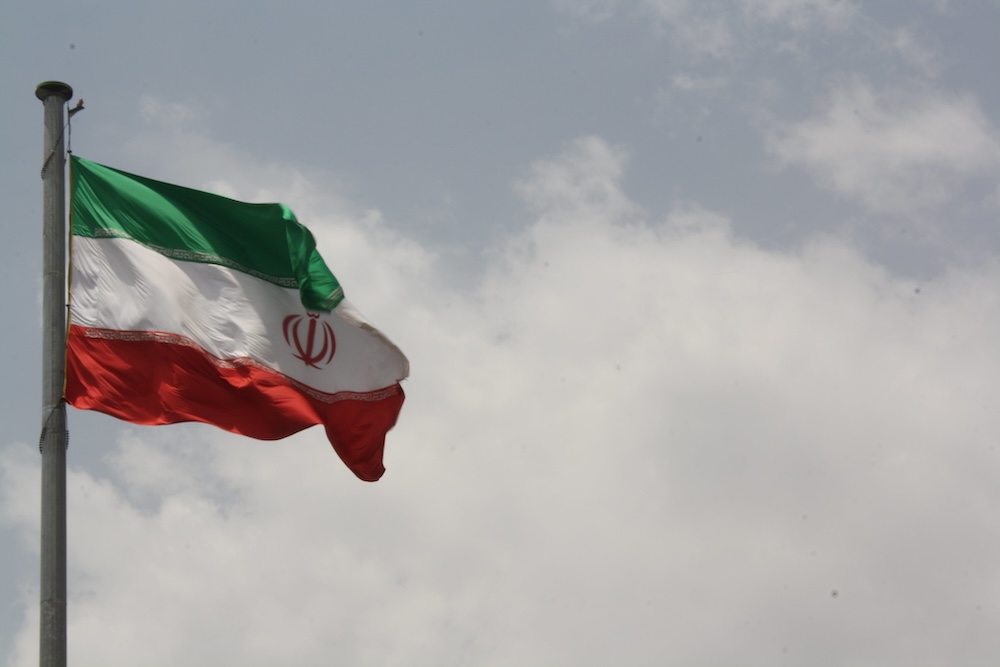
In consideration of current events, we have put together a list of books on Iran that we hope provides context and provokes careful thought.
Iran Reframed: Anxieties of Power in the Islamic Republic
Narges Bajoghli
Iran Reframed offers unprecedented access to those who wield power in Iran as they debate and define the future of the Republic. Over ten years, Narges Bajoghli met with men in Iran’s Revolutionary Guard, Ansar Hezbollah, and Basij paramilitary organizations to investigate how their media producers developed strategies to court Iranian youth. Readers come to know these men—what the regime means to them and their anxieties about the future of their revolutionary project. Contestation over how to define the regime underlies all their efforts to communicate with the public. This book offers a multilayered story about what it means to be pro-regime in the Islamic Republic, challenging everything we think we know about Iran and revolution.
Enduring Hostility: The Making of America’s Iran Policy
Dalia Dassa Kaye
US–Iran hostility has endured for longer than the Cold War. Momentous geopolitical shifts, changing leaderships, and evolving domestic priorities have not fundamentally altered this antagonistic relationship. Standard explanations pin the blame for this enduring hostility on Iran and its leaders’ revolutionary ideology and policies at odds with the United States and the West. While Iran bears significant blame for a deeply adversarial relationship—the country often engages in dangerous and repressive activities—this book demonstrates that “it’s them, not us” accounts cannot alone explain America’s posture toward this complicated but critically important country. Drawing on original interviews with former government officials, oral histories, memoirs, congressional hearings, archival material, and the author’s own participation in dozens of Iran-related track two meetings, Dalia Dassa Kaye deftly explores how America’s Iran policy is made, the people who make it, and the underlying ideas and perceptions that inform it. Dassa Kaye looks back at US policy toward Iran over the past four decades to help us look ahead, offering wider lessons for understanding American foreign policymaking and providing critical insights at a pivotal time of heightened military tensions in and around the Middle East.
Iranophobia: The Logic of an Israeli Obsession
Haggai Ram
Israel and Iran invariably are portrayed as sworn enemies, engaged in an unending conflict with potentially apocalyptic implications. Iranophobia offers an innovative and provocative new reading of this conflict. Haggai Ram, an Israeli scholar, explores prevalent Israeli assumptions about Iran to look at how these assumptions have, in turn, reflected and shaped Jewish Israeli identity. Drawing on diverse political, cultural, and academic sources, he concludes that anti-Iran phobias in the Israeli public sphere are largely projections of perceived domestic threats to the prevailing Israeli ethnocratic order. At the same time, he examines these phobias in relation to the Jewish state’s use of violence in the Palestinian territories and Lebanon in the post-9/11 world.
Between Iran and Zion: Jewish Histories of Twentieth-Century Iran
Lior B. Sternfeld
Iran is home to the largest Jewish population in the Middle East, outside of Israel. At its peak in the twentieth century, the population numbered around 100,000; today about 25,000 Jews live in Iran. Between Iran and Zion offers the first history of this vibrant community over the course of the last century, from the 1905 Constitutional Revolution through the 1979 Islamic Revolution. Drawing on interviews, newspapers, family stories, autobiographies, and previously untapped archives, Lior B. Sternfeld analyzes how Iranian Jews contributed to Iranian nation-building projects, first under the Pahlavi monarchs and then in the post-revolutionary Islamic Republic. The result is a rich account of the vital role of Jews in the social and political fabric of twentieth-century Iran.
Us&Them: A Novel
Bahiyyih Nakhjavani
Lili and Goli have argued endlessly about where their mother, Bibijan, should live since the Iranian Revolution. They disagree about her finances too, which remain blocked as long as she insists on waiting for her son—still missing but not presumed dead yet—to return from the Iran–Iraq war. But once they begin to “share” the old woman, sending her back and forth between Paris and Los Angeles, they start asking themselves where the money might be coming from. Only their Persian half-sister in Iran and the Westernized granddaughter of the family have the courage to face up to the answers, and only when Bibijan finally relinquishes the past can she remember the truth.
A story mirrored in fragmented lives, Us&Them explores the ludicrous and the tragic, the venal and the generous-hearted aspects of Iranian life away from home. It is a story both familial and familiar in its generational tensions and misunderstandings, its push and pull of obligations and expectations. It also highlights how “we” can become “them” at any moment, for our true exile is alienation from others. Acclaimed author Bahiyyih Nakhjavani offers a poignant satire about migration, one of the vital issues of our times.
Dust That Never Settles: Literary Afterlives of the Iran-Iraq War
Amir Moosavi
Dust That Never Settles considers how Iraqi and Iranian writers have wrestled with representing the Iran-Iraq War and its legacy, from wartime to the present. It demonstrates how writers from both countries have transformed once militarized, officially sanctioned war literatures into literatures of mourning, and eventually, into vehicles of protest that presented powerful counternarratives to the official state narratives. In writing the first comparative study of the literary output of this war, Amir Moosavi presents a new paradigm for the study of modern Middle Eastern literatures. He brings Persian and Arabic fiction into conversation with debates on the political importance of cultural production across the Middle East and North Africa, and he puts an important new canon of works in conversation with comparative literary and cultural studies within the Global South.
Say What Your Longing Heart Desires: Women, Prayer, and Poetry in Iran
Niloofar Haeri
Following the 1979 revolution, the Iranian government set out to Islamize society. Muslim piety had to be visible, in personal appearance and in action. Iranians were told to pray, fast, and attend mosques to be true Muslims. The revolution turned questions of what it means to be a true Muslim into a matter of public debate, taken up widely outside the exclusive realm of male clerics and intellectuals.
Say What Your Longing Heart Desires offers an elegant ethnography of these debates among a group of educated, middle-class women whose voices are often muted in studies of Islam. Niloofar Haeri follows them in their daily lives as they engage with the classical poetry of Rumi, Hafez, and Saadi, illuminating a long-standing mutual inspiration between prayer and poetry. She recounts how different forms of prayer may transform into dialogues with God, and, in turn, Haeri illuminates the ways in which believers draw on prayer and ritual acts as the emotional and intellectual material through which they think, deliberate, and debate.
Making Space for the Gulf: Histories of Regionalism and the Middle East
Arang Keshavarzian
Arang Keshavarzian writes a new history of the region that places Iran, Iraq, and the Arabian Peninsula together within global processes. He connects moments more often treated as ruptures—the discovery of oil, the Iranian Revolution, the rise and decline of British empire, the emergence of American power—and crafts a narrative populated by a diverse range of people—migrants and ruling families, pearl-divers and star architects, striking taxi drivers and dethroned rulers, protectors of British India and stewards of globalized American universities. Tacking across geographic scales, Keshavarzian reveals how the Gulf has been globalized through transnational relations, regionalized as a geopolitical category, and cleaved along national divisions and social inequalities.
Belonging on Both Shores
Lindsey R. Stephenson
For most of their history, the people around the Persian Gulf littoral were socially intertwined and economically interdependent. But the twentieth century ushered in nationalization projects, British imperial intervention, and border regulations, all of which posed challenges to everyday mobility in this oceanic world. Those crossing the water became the primary foil for bordering spaces, restricting and regulating movement, and defining difference more generally. Belonging on Both Shores tells the story of people’s struggles to move freely between Iran and the Arab shores of the Gulf as the unregulated mobility that had characterized everyday life in the nineteenth century was increasingly policed in the twentieth. Tracing the movement of Iranians across and around the Persian Gulf and investigating how the technologies of state and mobility transformed fluidity and people’s understanding of movement, this book tells a new story of how the modern Gulf was formed.
How Sanctions Work: Iran and the Impact of Economic Warfare
Narges Bajoghli, Vali Nasr, Djavad Salehi-Isfahani, and Ali Vaez
Sanctions have enormous consequences. Especially when imposed by a country with the economic influence of the United States, sanctions induce clear shockwaves in both the economy and political culture of the targeted state, and in the everyday lives of citizens. But do economic sanctions induce the behavioral changes intended? Do sanctions work in the way they should?
To answer these questions, the authors of How Sanctions Work highlight Iran, the most sanctioned country in the world. Comprehensive sanctions are meant to induce uprisings or pressures to change the behavior of the ruling establishment, or to weaken its hold on power. But, after four decades, the case of Iran shows the opposite to be true: sanctions strengthened the Iranian state, impoverished its population, increased state repression, and escalated Iran’s military posture toward the U.S. and its allies in the region. Instead of offering an ‘alternative to war,’ sanctions have become a cause of war. Consequently, How Sanctions Work reveals how necessary it is to understand how sanctions really work.
Accelerant: Energy Infrastructures and the Natural World in Making Modern Iran
Ciruce Movahedi-Lankarani
Accelerant analyzes the interwoven histories of energy, development, and the environment in Iran. Following the movement of natural gas from underground deposits, through infrastructures of refining and distribution, and into everyday life, Ciruce Movahedi-Lankarani explores the roles of development planners, oil firms, industrialists, engineers, and consumers—as well as the mountain ranges, sedimentary rock, and natural gas itself—to show how natural gas emerged as a crucial enabler of industrialization and a strong impetus for resource nationalism. Tracing the transformation of gas from a waste product into a vital resource, this book offers a history of anticolonial developmentalism in Iran—revealing a key driver toward intensified energy use that suggests why and how societies in the Global South became voracious consumers of fossil fuel energy.
The Struggle for Development in Iran: The Evolution of Governance, Economy, and Society
Pooya Azadi, Mohsen B. Mesgaran, Matin Mirramezani
This book provides a multidimensional analysis of Iran’s struggle for development between 1970 and 2020. The past several decades in Iran have been a period of sluggish and noninclusive economic growth, ill-fated social engineering with an Islamic template, political repression, and extensive environmental degradation. The intellectual discourse surrounding the impediments of growth in Iran has been dominated by an exaggerated notion of the role of ideology, class struggles, imperialism, and histori-cal contingencies, overlooking the profound impacts of institutions and fundamental socioeconomic trends.
The Incarcerated Modern: Prisons and Public Life in Iran
Golnar Nikpour
Golnar Nikpour explores the interplay between the concrete space of the Iranian prison and the role of prisons in producing new public cultures and political languages in Iran. From prison writings of 1920s leftist prisoners and communiqués of 1950s militant Islamists, to paintings of 1970s revolutionary guerrillas and mapping projects organized by contemporary dissident prisoners, carceral confinement has shaped modern Iranian political movements. Today, mass incarceration is a global phenomenon. The Incarcerated Modern connects Iranian history to transnational carceral histories to illuminate the shared architectures, economies, and techniques of modern punishment.
Colorblind: Racial Thinking and Cultural Production in Modern Iran and the Diaspora
Amy Motlagh
With this book, Amy Motlagh considers how racial thinking underpins cultural practices in Iran and the Iranian diaspora. Despite cultural traditions depicting black people and the documented presence of black Iranians, many have insisted that race is not an important aspect of Iranian culture, that “blackness” does not exist in Iran. Instead, it is the notion of being “Persian” that binds all Iranians together. But, as Motlagh argues, the word “Persian” masks a long racial history that depends on the specter of blackness to define what is truly Iranian.
Colorblind critically examines how these concepts express themselves in folklore, ethnography, literature, and films to show how understandings of race and slavery have moved from home country to host, and from host to home. In particular, ambivalence surrounding the concepts of “race” and “blackness” prevents Iranians from fully interrogating their own racial thinking, even while some diasporic Iranians position themselves as racially liminal and non-white. By closely examining these efforts, as well as the cultural and historical foundations they were built on, this book reveals how ideas about race and slavery in Iran have forged a specific conception of modern Iranian cultural identity.
Prozak Diaries: Psychiatry and Generational Memory in Iran
Orkideh Behrouzan
Prozak Diaries is an analysis of emerging psychiatric discourses in post-1980s Iran. It examines a cultural shift in how people interpret and express their feeling states, by adopting the language of psychiatry, and shows how experiences that were once articulated in the richly layered poetics of the Persian language became, by the 1990s, part of a clinical discourse on mood and affect. Orkideh Behrouzan traces the historical circumstances that prompted the development of psychiatric discourses in Iran and reveals the ways in which they both reflect and actively shape Iranians’ cultural sensibilities. Prozak Diaries offers an exploration of language as experience. In interpreting clinical and generational narratives, Behrouzan writes not only a history of psychiatry in contemporary Iran, but a story of how stories are told.
Alternative Iran: Contemporary Art and Critical Spatial Practice
Pamela Karimi
2024: Sharmin and Bijan Mossavar-Rahmani Center Book PrizeWinner of the 2024 Sharmin and Bijan Mossavar-Rahmani Center Book Prize, sponsored by the Sharmin and Bijan Mossavar-Rahmani Center for Iran and Persian Gulf Studies.
Alternative Iran offers a unique contribution to the field of contemporary art, investigating how Iranian artists engage with space and site amid the pressures of the art market and the state’s regulatory regimes. Drawing on interviews with over a hundred artists, gallerists, theater experts, musicians, and designers, Pamela Karimi throws into sharp relief the extraordinary art and performance activities that have received little attention outside Iran. Attending to nonconforming curatorial projects, independent guerrilla installations, escapist practices, and tacitly subversive performances, Karimi discloses the push-and-pull between the art community and the authorities, and discusses myriad instances of tentative coalition as opposed to outright partnership or uncompromising resistance.
Soundtrack of the Revolution:The Politics of Music in Iran
Nahid Siamdoust
Music was one of the first casualties of the Iranian Revolution. It was banned in 1979, but it quickly crept back into Iranian culture and politics. Drawing on over five years of research in Iran, including during the 2009 protests, Nahid Siamdoust introduces a full cast of characters, from musicians and audience members to state officials, and takes readers into concert halls and underground performances, as well as the state licensing and censorship offices. She closely follows the work of four musicians—a giant of Persian classical music, a government-supported pop star, a rebel rock-and-roller, and an underground rapper—each with markedly different political views and relations with the Iranian government. Taken together, these examinations of musicians and their music shed light on issues at the heart of debates in Iran—about its future and identity, changing notions of religious belief, and the quest for political freedom.
Days of Revolution: Political Unrest in an Iranian Village
Mary Elaine Hegland
Outside of Shiraz in the Fars Province of southwestern Iran lies “Aliabad.” Mary Hegland arrived in this then-small agricultural village of several thousand people in the summer of 1978, unaware of the momentous changes that would sweep this town and this country in the months ahead. She became the only American researcher to witness the Islamic Revolution firsthand over her eighteen-month stay. Returning to Aliabad decades later, Days of Revolution closes with a view of the village and revolution thirty years on. Over the course of several visits between 2003 and 2008, Mary Hegland investigates the lasting effects of the Revolution on the local political factions and in individual lives. As Iran remains front-page news, this intimate look at the country’s recent history and its people has never been more timely or critical for understanding the critical interplay of local and global politics in Iran.
Whisper Tapes: Kate Millett in Iran
Negar Mottahedeh
Kate Millett was already an icon of American feminism when she went to Iran in 1979. She arrived just weeks after the Iranian Revolution, to join Iranian women in marking International Women’s Day. Intended as a day of celebration, the event turned into a week of protests. Millett, armed with film equipment and a cassette deck to record everything around her, found herself in the middle of demonstrations for women’s rights and against the mandatory veil.
Listening to the revolutionary soundscape of Millett’s audio tapes, Negar Mottahedeh offers a new interpretive guide to Revolutionary Iran, its slogans, habits, and women’s movement—a movement that, many claim, Millett never came to understand. Published with the fortieth anniversary of the Iranian Revolution and the women’s protests that followed on its heels, Whisper Tapes re-introduces Millett’s historic visit to Iran and lays out the nature of her encounter with the Iranian women’s movement.
Revolution without Revolutionaries: Making Sense of the Arab Spring
Asef Bayat
The revolutionary wave that swept the Middle East in 2011 was marked by spectacular mobilization, spreading within and between countries with extraordinary speed. Revolution without Revolutionaries is both a history of the Arab Spring and a history of revolution writ broadly. Setting the 2011 uprisings side by side with the revolutions of the 1970s, particularly the Iranian Revolution, Bayat reveals a profound global shift in the nature of protest: as acceptance of neoliberal policy has spread, radical revolutionary impulses have diminished. Protestors call for reform rather than fundamental transformation. By tracing the contours and illuminating the meaning of the 2011 uprisings, Asef Bayat gives us the book needed to explain and understand our post–Arab Spring world.
Last Scene Underground: An Ethnographic Novel of Iran
Roxanne Varzi
Leili could not have imagined that arriving late to Islamic morals class would change the course of her life. But her arrival catches the eye of a young man, and a chance meeting soon draws Leili into a new circle of friends and artists. Gathering in the cafes of Tehran, these young college students come together to create an underground play that will wake up their generation. They play with fire, literally and figuratively, igniting a drama both personal and political to perform their play—just once.
From the wealthy suburbs and chic coffee shops of Tehran to subterranean spaces teeming with drugs and prostitution to spiritual lodges and saints’ tombs in the mountains high above the city, Last Scene Underground presents an Iran rarely seen. Young Tehranis navigate their way through politics, art, and the meaning of home and in the process learn hard lessons about censorship, creativity, and love. Their dangerous discoveries ultimately lead to finding themselves.


