Who does the laundry in your house?
Bias, entrenched ideas, and federal court confirmation hearings
Who does the laundry in your house?
That may not be a question most of us would expect to be asked in a professional interview, especially one in which we are under consideration for one of the most prestigious and highly sought-after jobs in our field. Yet when Amy Coney Barrett sat before the Senate Judiciary Committee to field questions about her qualifications and ability to serve on the U.S. Supreme Court, that is one of the many gender-biased inquiries she was faced with.
The question, undoubtedly, was intended to be light-hearted not discriminatory. The Senator who asked it seemed to think he was complimenting Barrett’s ability to juggle so many competing demands on her time. And yet, in the decades of public confirmation hearings, it had never seemed to occur to the Senators to ask any of Barrett’s male predecessors who handled their household chores. Male nominees simply don’t elicit images of busy homes and laundry. But Barrett did.
This is how bias often works, and why it can be so challenging to grapple with.
In high profile settings like the Senate Judiciary Committee, bias today rarely (we hope) manifests as intentional discrimination on the basis of race or gender. Rather, it appears when the nominee doesn’t quite “fit” entrenched ideas of what a Supreme Court justice is expected to look like, or how they are supposed to act. That disconnect can generate suspicion, surprise, or discomfort; reactions that women and nominees of color have to then deal with. So, Barrett did what so many women and people of color have done in similar situations. She laughed it off, and answered the question.
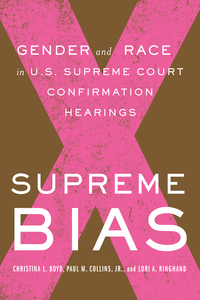
As we discuss in of our book, Supreme Bias: Gender and Race in U.S. Supreme Court Confirmation Hearings », her experience is far from unique. Race and gender are central to confirmation hearings in multiple ways, including frequent and robust discussions of issues such as civil rights, gender, and abortion. But women and person of color nominees face additional, unique situations in which their gender, race, or both are at the forefront of their confirmation hearings.
We show, for example, that female nominees and nominees of color face higher rates of questions about their competence to serve on the Court, they are interrupted more often, they are subjected to more questioning on areas of stereotyped expertise (such as gender discrimination or race discrimination), and they are described by senators in less positive, more negative, and more differentiating ways.
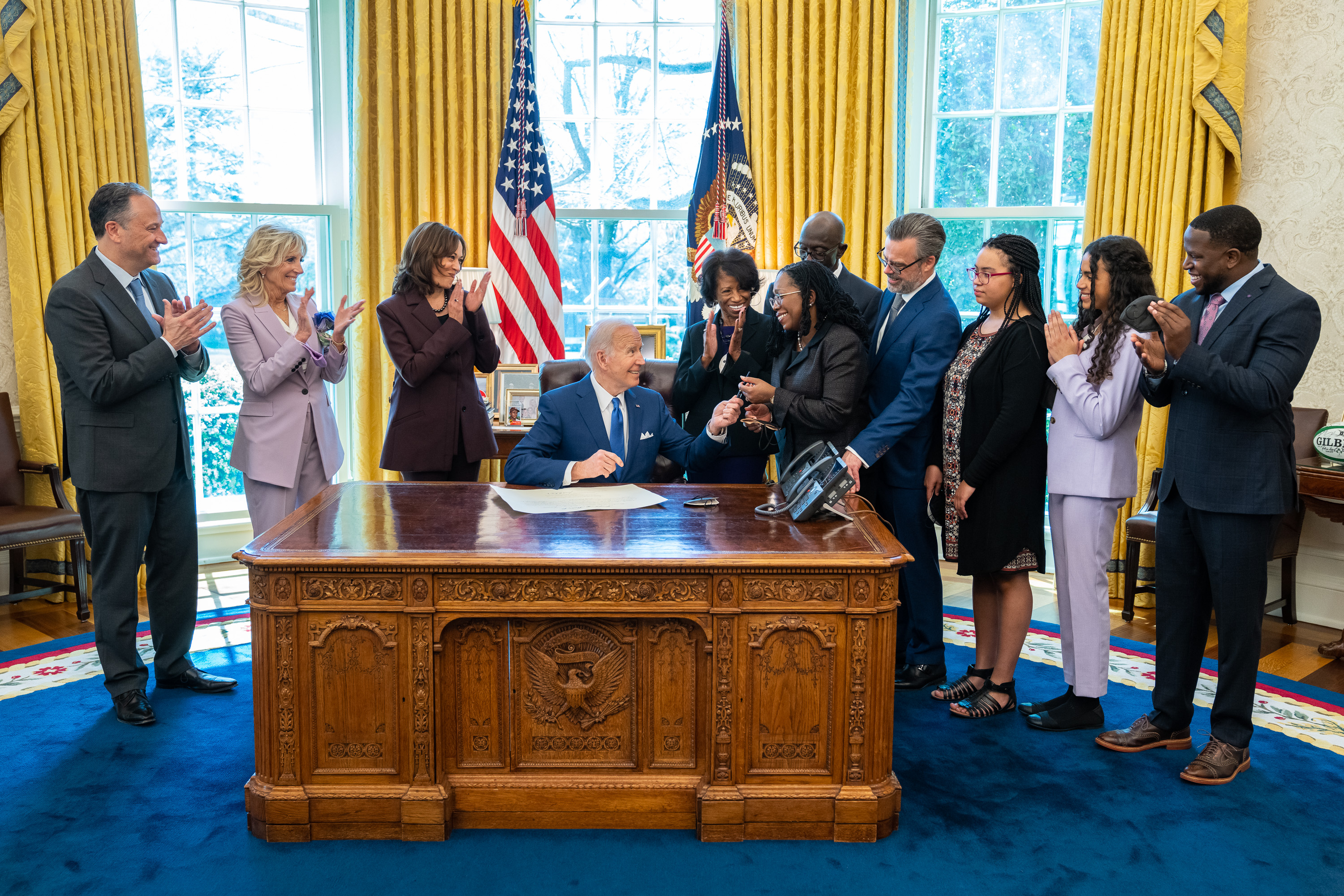
Ketanji Brown Jackson’s hearing in 2022 was replete with examples of this. She faced an extraordinary number of interruptions, and tense — at times hostile —questioning, which Senator Cory Booker (D-NJ) would later describe as “deflating,” “disappointing,” and “a bit beyond the pale.”
President Biden’s historic effort to ensure a diverse federal judiciary mean this situation may get worse before it gets better. By early August 2023, Biden had nominated and successfully confirmed 140 federal judges, with the majority being women and/or members of communities of color. This stands in sharp contrast to his immediate successor, Donald Trump, whose appointments to the federal bench were comprised of only 24% of women and 16% of people of color.
Several of Biden’s appointees have faced harsh questioning from senators involving their qualifications to be federal judges and what it means to have a diverse federal bench.
For instance, Republican senators grilled Mustafa Kasubhai, a Muslim-American district court nominee, on issues including Black Lives Matter, racial diversity, and the use of pronouns in the courtroom. This was done in an effort to paint him as extreme and therefore unfit to serve.
These patterns closely follow those we observe with respect to Supreme Court nominees in our book. That is, women and people of color appointed to the federal courts are frequently portrayed by their detractors as being unqualified or having extreme beliefs on matters relating to gender and race.
Thus, while the nation has come a long way in diversifying the federal bench and promoting equality in American society, as we show in Supreme Bias, there is still a great deal of work left to do.


