The Art Book Bargain of the Year: Carleton Watkins
Though he failed miserably at prospecting, Carleton Watkins struck gold when he took up photography.
After abandoning a fruitless career as a gold prospector, Carleton Watkins began his photography career in the 1850s as somewhat of a poseur. Following the sudden departure of another photographer, the owner of a photo studio frantically hired Watkins, who had no training in the nascent medium—invented only 20 years previously—to quickly fill the newly vacant job until a more experienced photographer could be found. Though the owner was only looking for an amiable placeholder, Watkins swiftly took to photography and only a few years later, the gold prospector-cum-store clerk had established himself as one of the preeminent photographers of the untrammeled Western frontier.
See the Cantor’s Carleton Watkins Flickr album
featuring images from the exhibit.
Regarded as a master of landscapes, Watkins’ work made the circuit of global expositions, garnering prizes and accolades along the way. Pristine river valleys, stark plains, ocean vistas, and snapshots of the boomtowns dotting the West Coast were all captured by his lens. Best known, however, is Watkins’ study of Yosemite Valley, a collection of photographs that influenced Congress and President Lincoln to sign into law a conservation act that would stave off development and preserve the land’s natural beauty.
Those photos of Yosemite, along with two other famous Watkins collections—Photographs of the Pacific Coast and Photographs of the Columbia River and Oregon—are featured in the Cantor Arts Center’s summer-long exhibit, Carleton Watkins: The Stanford Albums. Not only does the exhibit feature over 80 mammoth black-and-white prints of Watkins’ stunning work, but the show also includes “cool digital features that expand fields of vision and offer then-and-now comparisons”—including images of an adolescent San Francisco.
Carleton Watkins: The Stanford Albums—the art book published in tandem with the exhibit—features 160 of Watkins’ photographs, including those on display at the Cantor, alongside a handful of concise essays on Watkins’ work and legacy.
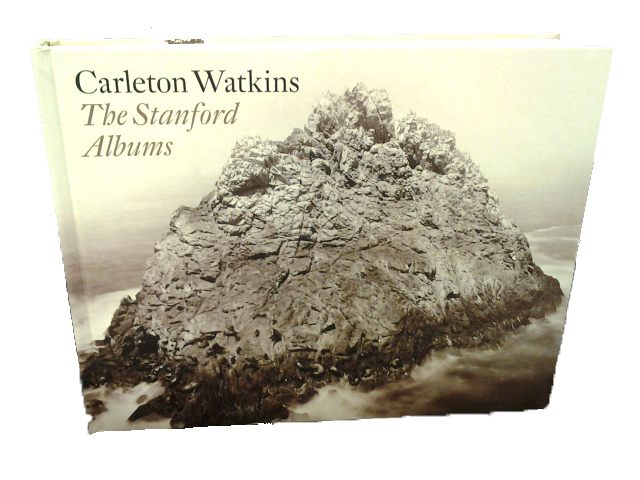
Watkins’ photographs, both those on exhibit, and those contained in the pages of this “large, lavish” volume capture some of the farthest reaches of untouched natural landscape—what 19th century visual artists regarded as the American sublime—while at the same time documenting industry’s first frenetic forays into the American West. The beauty encapsulated in these photos effectively inaugurated the national parks initiative in the United States and captured a crucial chapter in the nation’s visual history. As Kenneth Baker wrote in his review of the exhibit for SF Gate, “At $40, this figures to be the art book bargain of the year.”
Carleton Watkins: The Stanford Albums
will be on exhibit at the Cantor from April 23 to August 17


