On Brazilian Aardvarks, Wikipedia, and Digital Populism
What many fail to grasp is that Wikipedia, despite its suffix, is not an encyclopedia.
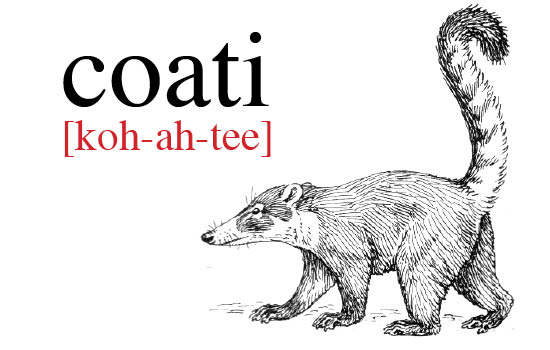
Ever heard of a coati? How about a Brazilian aardvark? Ostensibly the two are one-in-the-same, at least according to Wikipedia. Problem is there’s no such thing as a Brazilian aardvark, and the coati (of which there is such a thing) is not an aardvark at all—Brazilian or otherwise; it’s a raccoon.
So how did this case of mistaken mammalian identity come to be? As the New Yorker's Eric Randall reports, the culprit is Wikipedia and it’s less than stringent author credentialing process. An inside joke between two brothers prompted one of them to interpolate this one mundane phrase into the article on coatis: “also known as a Brazilian aardvark.” The edit endured and the seemingly innocuous addition was subsequently picked up by a handful of journalists and even repeated in an academic book on natural history. A befuddling feedback loop ensued: as more print sources adopted the coati’s invented moniker from Wikipedia, Wikipedia in turn cited those sources to verify the coati’s new nickname.
At the outset of Randall’s New Yorker piece he points out that the fraudulent aardvark claim was planted by a then seventeen-year-old high school student from New York—ostensibly one without much expertise in the way of either zoology or Brazilian colloquialisms. Randall’s article thus touches on the crux of much of the criticism leveled at Wikipedia; it’s open-ended model of uncredentialed authors.
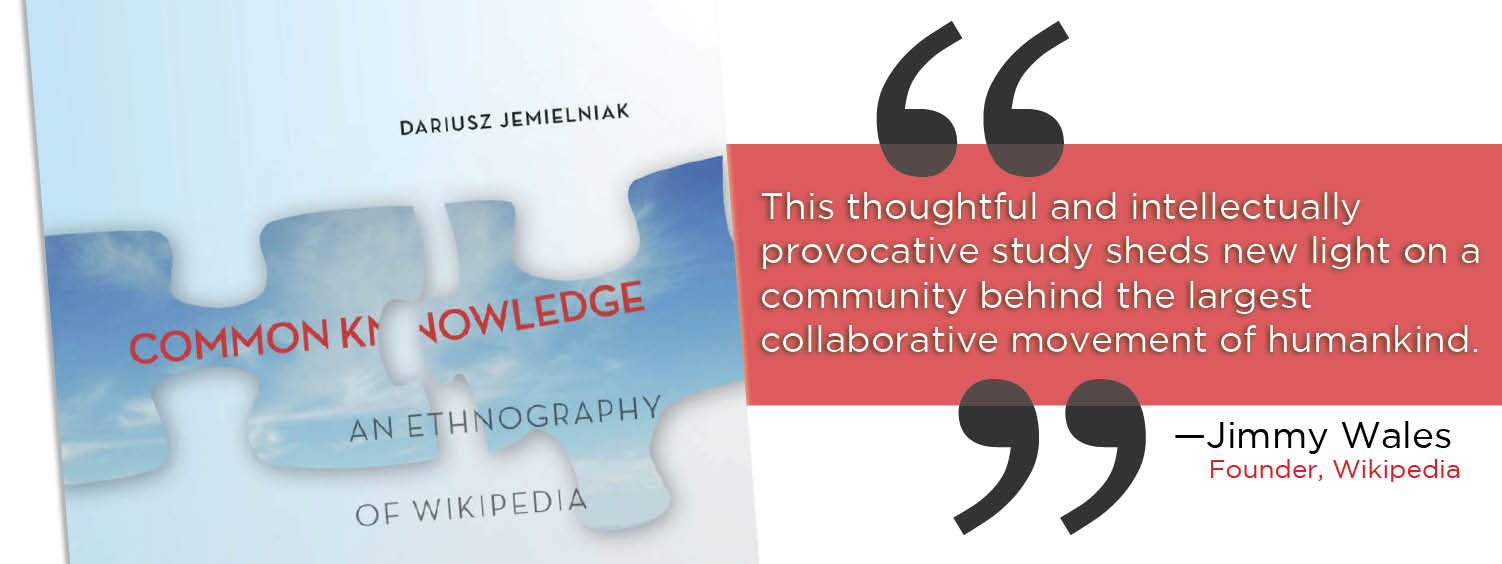
Naturally the lack of credentialed sources hasn’t done wonders for Wikipedia’s overall reputation—in the world of academia, the site’s all but quarantined. But amongst Wikipedia’s governance community—its moderators, editors, and respected article authors—the lack of author credentialing is upheld as a virtue. Dariusz Jemielniak, a heavily engaged Wikipedian and Associate Professor of Management, describes in detail the little-understood value hierarchy and operational praxis of Wikipedians in his debut book, Common Knowledge: An Ethnography of Wikipedia.
“Wikipedia is probably one of the few communities in the world where a teenager can win a meritocratic debate with a person holding a PhD.”
What many fail to grasp is that Wikipedia, despite its suffix, is not an encyclopedia. It is, in fact, a significant departure from the encyclopedia model. For a time, Wikipedia founder Jimmy Wales toyed with the idea of creating an online knowledge-aggregating platform that would be populated and peer reviewed exclusively by expertly credentialed authors (a virtual encyclopedia). That was Wikipedia’s predecessor, Nupedia. There’s a reason you’ve likely never heard of it: it was a flop. You can now find its epitaph indexed on its successor’s website (Wikipedia).
Whereas Nupedia was a continuation of the encyclopedia model, under which information flowed unidirectionally from an elite group of experts, to the masses, Wikipedia, by contrast, is a paragon of online collectivism. For its community members, its process is just as important as its product. The environment cultivated by Wikipedia is one of open-collaboration which places a premium on inclusivity, democratic participation, and meritocratic dispute resolution. As such, expert status and other credentials external to the world of Wiki are left at the door, not only in deference to privacy concerns, but also with the express intent of preventing the replication of real-world hierarchies in the Wikipedia community. “Wikipedia,” Jemielniak writes, “is probably one of the few communities in the world where a teenager can win a meritocratic debate with a person holding a PhD” (120).
That may not sound like a selling point, but in the meritocratic world of Wiki, respect is earned, and status signaled, in different ways. The social capital that matters most to Wikipedians is that which they build in the community through objective writing, diligent editing, and civil conduct in disputes. Undergirding Wikipedia’s entire project is a spirit of open collaboration that is central to its organizational culture, as Jemielniak notes:
The disregard for formal expertise may result in failing to hold to an article version theoretically more correct, at least in the eyes of an expert, as persistence in discussions is often more important than being right […] But since credential checks could undermine the fundaments of Wikipedia's informal structure and collaboration philosophy, they are not likely to be accepted by the community.
In fact, institutionalized appreciation of experts may strongly deter and effectively prevent the masses from participating, damaging the Wikipedia model of widely distributed, low-cost participative crowd sourcing of knowledge creation.
(122)
Inevitably the community’s anti-expert tendencies can work against the online encyclopedia’s mission for continual improvement (as in the case of the “Brazilian aardvark”), but engaged Wikipedians trust in the procedural checks to eventually work out the kinks. Rather than focusing on strict author controls and honorific titles to ensure the authenticity of information, Wikipedia has reduced the problem of truth to the problem of sources.
Two core editorial tenets of the site require transparency of citations; any potentially contestable claim must be attributed to a reliable published source.[1] Unbacked claims, such as, oh say, that coatis are “also known as Brazilian aardvarks”—claims for which there is no original research with which to confirm—are flagged as lacking a citation. This rule, the rule of no original research, “forbids publishing meaningful information without sourcing it to a publication” or flagging it as unverified (20).
Bearing this in mind the Case of the Coati seems less an indictment of Wikipedia and more a misguided use case for inquiring journalists. Perhaps it’s the paucity of discreet understanding of the inner workings of Wikipedia that lead some to take its authority at face-value.[citation needed] Regardless, it stands to reason that had those first few journalists simply disregarded uncited portions of the coati article, the erroneous feedback loop could have been averted altogether.
Despite its ubiquity, and its 14-year tenure as the go-to reference for millions, Wikipedia is still susceptible to vandalism and, when it comes to evaluating contested information, it is oftentimes more committed to pursuing its own populist brand of due process than surefire “correctness”. While Wikipedians trust in the procedural protocols to lead the community to an acceptable level of accuracy, occasional innovations on the truth do slip through.
Of course, an official disclaimer hides in plain sight on (where else?) Wikipedia’s page on Wikipedia:
The fact that Wikipedia explicitly is not designed to provide correct information about a subject, but rather only present the majority ‘weight’ of viewpoints creates omissions which can lead to false beliefs based on incomplete information.
(And that claim is cited three-times over, so you know it’s true).
Start Reading Common Knowledge »
[1] Like this: Jemielniak, Dariusz (2014), Common Knowledge: An Ethnography of Wikipedia, Redwood City: Stanford University Press.


