The Vomit School of Literature
Fighting Censorship in New York City
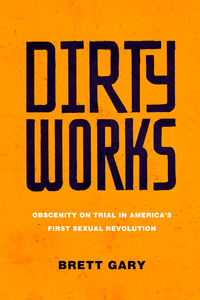
In honor of Banned books week SUP is proud to present an adapted excerpt from Chapter 5 of Dirty Works: Obscenity on Trial in America’s First Sexual Revolution ». A rich account of 1920s to 1950s New York City, starring an eclectic mix of icons like James Joyce, Margaret Sanger, and Alfred Kinsey—all led by an unsung hero of free expression and reproductive rights: Morris L. Ernst, a New York City attorney and long-time general counsel for the ACLU
IN THE EARLY 1930s the battles over obscenity laws and their enforcement took place in a rapidly changing media environment in which “objectionable” images and works were increasingly widespread. Amid the “eroticization of leisure time,” to use Jay Gertzman’s phrase, John S. Sumner and his moral reform allies were hard-pressed to protect the “genteel literary code” they and an older generation of established publishers and literary gatekeepers had adhered to.1 By the end of the 1920s the book publishing industry was regularly making modernist works available to an interested public. Sumner attacked all books that violated this genteel code—books he thought were not morally uplifting or appropriately reticent about discussing the physical body, especially sexual issues. As Gertzman writes, Sumner and his fellow “moral entrepreneurs” believed that “since the life of the human body stood as far from morality as self-centered sensual satisfaction stood from disinterested reason, all texts that focused on sex, whether marriage manuals, birth-control tracts, or steamy novels, spoke aloud what for the sake of spiritual health had to be kept hidden.”2
Although soft-spoken and reserved compared to his predecessor, Anthony Comstock, Sumner viewed the world in similarly stark black-and-white terms. He spoke of decent folks versus cultural pariahs, clean versus dirty, uplifting versus degrading, moral versus immoral, patriotic versus subversive, high versus low, decent versus indecent, and so on. As Gertzman writes, Sumner “thought it necessary to defend a ‘one hundred percent American’ moral consensus—an amalgam of sexual reticence, patriotism, and Christian piety—against the immigrant, the Bolshevik, the money-grubbing urbanite, the worldly sophisticate, and the effete intellectual.”3 Fighting against such moral absolutism was an insurgent intellectual movement—modernism—that privileged individual experience, subjected inherited cultural standards to criticism, and inspected sex and sexuality as the governing principles driving human existence.4 These forces and instincts ought to be examined, discussed, performed, and written about, not repressed and silenced.
Thoughtful censorship, however, was not necessarily anathema to intellectuals, publishers, and other book purveyors. Many still believed that literature, as all art, should play a vital role in cultural uplift and instruction. They thought literature should be defended not just from overzealous censors but also from literary hacks and smut peddlers. Indeed, a widely shared sentiment across class, religious, and cultural lines was that the increasingly pervasive pornography and graphic tabloid fare circulating in New York City offered nothing redeeming and deserved no legal protection. Critics who winced at Sumner’s attacks on “legitimate” books still wanted him to destroy the smutty side of New York’s underground economy of titillating materials.
The increasing traffic in erotica or pornographic print culture proved especially crucial to the ways in which battles over books were fought in New York’s courtrooms and newspapers in the early 1930s. John Sumner’s efforts to contain erotically tinged literary works were inextricable from the larger transformation of print culture, with its explosion of inexpensive paperbacks, true crime and true romance magazines, police gazettes, dirty playing cards, lewd photographs, and pornography ranging from expensively bound volumes of imported erotic “classics” to cheap pocket-size one-handed “readers.” As Gertzman explains, a ready market for erotica ran across class lines, and “erotica distributors quickly assessed which readers would pay what for their wares.”5 The existence of these markets—expensively packaged goods in high-end bookstores and cheaply produced reprints sold through the mails—kept Sumner and his allies busy. Whatever fears they had about respectable book publishers undermining society’s moral foundations through modernist works were hugely exacerbated by the increasingly tainted print culture and the explosion of spaces for selling sex, adventure, violence, and gore.
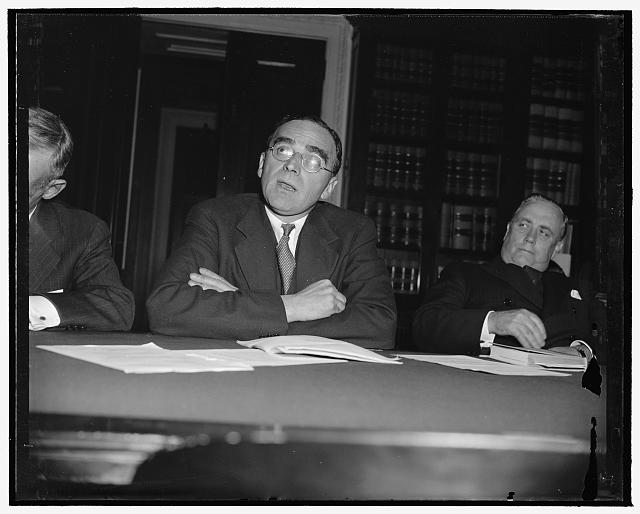
Morris Ernst and his colleague Alexander Lindey thought they could draw a reasonably bright line between their clients –book publishers and writers — whose works might invoke sexual themes, and the real smut mongers, whose works reveled in graphic details.
Pay Day and the “Vomit School of Literature”
In February 1930 a small New York publishing house, Brewer & Warren Inc., published the first novel by Nathan Asch, son of the revered New York–based Yiddish writer Sholem Asch. Pay Day tells the story of twenty-four hours in the life of an undereducated, economically and sexually frustrated New York City clerk named Jim. Jim is not a likable character. He is antiheroic at best. He lives with his mother, his sister, and her fiancé, whom he loathes and fantasizes about attacking. Jim is basically a charmless loser with little to redeem him, and the novel offers him no redemptive arc or transcendence of his condition. When Lindey and Ernst defended the publisher, their memorandum to the court described the book as a realistic human story that “portrays with vividness and fidelity the frustrations that wrack a humdrum life.” They described Jim as an “obtuse, bewildered, weak-willed, blundering individual,” and though he was not contemptible, he was pathetic.9
Released with an initial run of 5,000 copies, Pay Day garnered plenty of advertisement and reviews. Some reviewers praised its sociological realism and honesty. Others criticized its coarseness. None of the reviewers gave it high praise as literature or art, but no one decried it as smut either. And it sold fairly well, roughly 3,500 copies by the time Sumner got an indictment against it and raided the publisher’s warehouse in April 1930.10
Typical of his strategies, Sumner had his chief Vice Society assistant, Charles Bamberger, set up a sting at the publisher’s offices. Bamberger went to the offices in the guise of a book dealer and purchased a copy of Pay Day from a salesman at Brewer & Warren. Several days later, on April 17, Sumner and Bamberger returned with a policeman to serve a summons to the firm. They seized fifty-six copies of Pay Day along with several other books.11 As Gertzman notes, seizing other titles along with those named in the warrant was one of Sumner’s usual tactics: “The more books he carted off, the greater the chance of winning the case on the basis of the contents of one or more of them.”12
Magistrate Louis B. Brodsky, who signed Sumner’s warrant for the book seizure and arrest, set a date for a month hence to hear the arguments. He requested memoranda of law from counsel. When Brewer & Warren’s regular lawyer approached Ernst about helping with the obscenity charges, neither Ernst nor Lindey had heard of the book. Before agreeing to defend it, they needed to read it. They wanted winnable cases, which meant defending books with literary merit, not “smut.” Lindey read Pay Day and told Ernst that he did not think it was obscene and that they could “win out in the end.” They could use the occasion to promote their anti-Sumner, anti-censorship agenda, and because the publishers wanted to defend their investment, they were willing to pay Ernst’s firm a high retainer fee, with more money to follow if they won in court.13 Brewer & Warren also hoped to turn the legal action into good publicity while reassuring booksellers of their reliability. Seeing the potential benefits of winning at trial, they mailed a flier to their booksellers: “If you want to be sure of having stock in your store to meet the demand for the book which the publicity will create, send in your orders now.”14 As for the book’s credibility, they protested, “We published Pay Day in good faith—believing that it represents an actual phase of New York life. And though it is frankly expressed—it is actual truth.”15
Ernst was ever alert to publicity possibilities as well and immediately enlisted allies on behalf of Pay Day. Sending copies of the book to journalists Walter Lippmann and Harry Elmer Barnes, he implored them to make some noise about Sumner’s activity, offering an anti-censorship bromide: “If this book is banned, no truthful life as to frustrations of adolescents can ever be printed.”16 Lindey cultivated other editorialists, including the New York World columnist Harry Hansen, thanking him for his recent support in his coverage of the [Mary Ware] Dennett [sex education] case and requesting more of his “generous cooperation.”17 Hansen came through, delivering a scathing editorial that noted the irony that Sumner’s attacks would only increase sales of Asch’s work: “The attack of the self-appointed custodians of the morals of the people” is “another example of the muddle-headedness of censorship. Now that Sumner has pinned the order of martyrdom on it, it will get a tremendous vogue in the under-the-counter market.”18 Lindey thanked Hansen for his “splendid column” and also acknowledged that “none of us have any illusions about Pay Day as a great piece of literature.” But, he added, “if Asch has something to say he ought to say it, even if we do not like it and even if his mode of expression and his taste may differ from our own.”19
Lindey’s admission about the book’s weak literary value was influenced by the aesthetic ambivalence, if not outright disdain, expressed by the belles lettres crowd. Ernst and Lindey had written Sinclair Lewis, Lewis Gannett, Charles and Mark van Doren, Joseph Wood Krutch, the psychiatrist Frederick Wertham, and other writers they could depend on in hopes that they would offer their support. Some refused to endorse Pay Day, and more than a few of their usual allies sensed something vital at stake in the very idea of Literature. They could not support a work belonging to what New York’s ex-commissioner of health Louis Harris referred to as “the vomit school of literature,” with some refusing to accord Asch’s novel the status of literature. The responses reflected a few recurrent themes: that standards >?and taste matter; that the market-driven proliferation of trash ennobled no one and did not contribute to art or culture; and that, though censorship in general was problematic, not all books deserved the light of day.
To find out what happened next start exploring Dirty Works »
Notes
1. Jay Gertzman, Bookleggers and Smuthounds: The Trade in Erotica, 1920–1940 (Philadelphia: University of Pennsylvania Press, 1999), 50.
2. Gertzman, Bookleggers and Smuthounds, 10.
3. Gertzman, Bookleggers and Smuthounds, 12.
4. Andrea Friedman uses the phrase “moral absolutism,” explaining that the disputes in this era about how to control what New Yorkers could see and read were contests about who would have moral authority and who would speak for the public. She pits two forces with different claims to speaking for and on behalf of the public against one another: the moral absolutists versus what she calls democratic moral authority. See Andrea Friedman, Prurient Interests: Gender, Democracy, and Obscenity in New York City, 1909–1945 (New York: Columbia University Press, 1999), 1–17.
5. Gertzman, Bookleggers and Smuthounds, 10. For an excellent treatment of Sumner and his Vice Society’s influence, see Paul Boyer, Purity in Print: Book Censorship in America from the Gilded Age to the Computer Age, 2nd ed. (Madison: University of Wisconsin Press, 2002), esp. chaps. 3–7.
9. Memorandum of Law Submitted by Defendants in Support of Motion to Inspect the Grand Jury Minutes and to Dismiss the Indictment), People of New York v. Brewer & Warren, Inc., and Fred Russey, May 15, 1930, HRC, MLE Papers, Box 740, Folder 740.5.
10. Sumner got an indictment from Magistrate Brodsky on April 17, 1930, and conducted a raid with police officer William R. Wittenberg, taking fifty-six copies of the book. For details of the case, see HRC, MLE Papers, Box 740, Folder 740.5.
11. Other books seized in the raid included Seductio ad Absurdum; Winds of Gobi (two copies); The Diary of Tolstoi’s Wife, vol. II; The Author’s Annual; and Devil Drums. See Summary of Case and Opinion of Magistrate Henry M. R. Goodman, People of New York v. Brewer & Warren, Inc., and Fred Russey, HRC, MLE Papers, vol. 90.
12. Gertzman, Bookleggers and Smuthounds, 108.
13. In a letter to Ernst, Lindey reviews the fee schedule discussion he had with Brewer & Warren’s usual counsel, agreeing that Greenbaum, Wolff & Ernst would get a net retainer of $1,000 and another $2,500 if or when they won. Lindey to Ernst, April 19, 1930, HRC, MLE Papers, Box 385, Folder 385.7.
14. Brewer & Warren flier, April 23, 1930, HRC, MLE Papers, Box 385, Folder 385.7.
15. Brewer & Warren flier, April 23, 1930.
16. Ernst to Barnes, April 23, 1930, HRC, MLE Papers, Box 385, Folder 385.7. Ernst sent the same letter and two copies to journalist Walter Lippmann, fully aware that Pay Day had limited virtue as high-minded literature but was not without social documentary value. The salient issues, he reminded Lippmann, were Sumner’s tactics and book censorship in general.
17. Lindey to Hansen, April 26, 1930, HRC, MLE Papers, Box 385, Folder 385.7.
18. Hansen, New York World editorial, quoted in Memorandum of Law Submitted by Defendants, 8.
19. Lindey to Hansen, May 1, 1930, HRC, MLE Papers, Box 385, Folder 385.7.


